
Foam vs Plastic Practice Golf Balls: Which Should You Use?
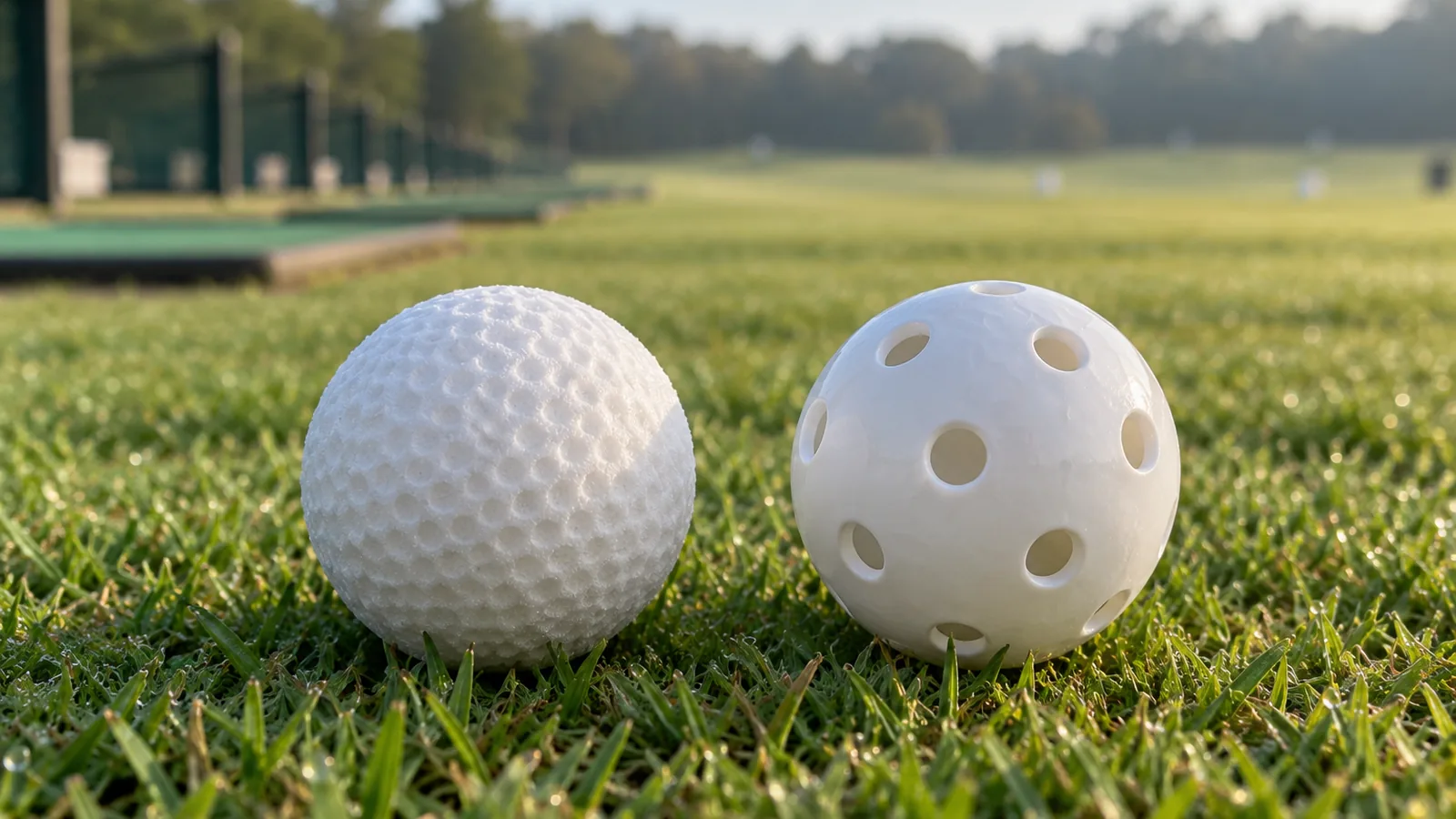
For foam vs plastic practice golf balls, neither type has been proven better, and the weights differ: about 14 g for a foam ball versus about 5 g for a vented plastic ball. Keep vented plastic balls away from drivers, since the maker advises against it.
Foam vs plastic practice golf balls: which should you use?
Quick answer: Choose foam for indoor chipping and putting, and vented plastic for outdoor chips and iron shots, because makers position each type for those shots. No independent test compares how either type flies or feels, and distances vary by product, so GoSports’ Foam Flight is rated at roughly 110 yards maximum, while Franklin’s foam ball is listed at less than 30 yards.
- Indoor chipping and putting: Pick foam, since Franklin and GoSports both recommend it for these shots.
- Full swings into a net: Use GoSports Foam Flight in a larger garage or backyard.
- Outdoor chips and irons: Choose FORB’s vented plastic ball, which weighs about 5 g.
- Drivers: Don’t hit vented plastic balls with a driver, since FORB advises against it.
- Near glass: Keep these balls away from windows, because Orlimar’s pack has no window-impact test.
How Do Foam and Plastic Balls Compare?
The right pick depends on your space and goals.
| Ball | Type | Weight (g) |
|---|---|---|
| GoSports Foam Flight | Foam, compressed-foam shell | about 14 |
| FORB airflow | Plastic, vented | about 5 |
The foam ball weighs nearly three times as much as the vented plastic ball. Weight is the one measurement both sources report, so it’s the only direct side-by-side number here.
Distance claims vary by product, not just by material. GoSports lists roughly 110 yards maximum for its foam ball, while Franklin lists less than 30 yards for its foam ball. No distance figure was supplied for the plastic ball, so you can’t compare distance directly.
Orlimar’s mixed pack puts both types at the same 1.60 in diameter, slightly smaller than regulation size. If you want to compare them in one session, that pack is the only one we found with both types at matching size. Neither type has independent test data on flight or impact feel, so treat these specs as a starting point.
Where Can You Practice With Each Type?
Foam balls are the makers’ pick for indoor chipping and putting, while vented plastic balls are meant for chipping and iron shots.
Franklin recommends its foam balls for both indoor and outdoor use, with indoor chipping and putting as the main use. GoSports adds full shots into a net in a larger garage or backyard. Orlimar’s mixed pack pairs high-density foam balls with plastic balls that have air holes, and both measure 1.60 in, slightly smaller than regulation size.
Plastic balls cover a different set of spots, according to their makers:
- Backyards and gym classes: The hollow plastic balls work for indoor and outdoor practice, including backyards, gym classes, and training drills.
- Chipping and iron shots: Vented plastic balls suit these shots.
- Driver swings: Don’t use vented plastic balls with drivers.
Distance depends on the product, so read the listing for the ball you’re buying. Champion Sports gives no distance figure for its plastic balls.
Warning
Orlimar says its mixed pack reduces worry about damaging valuables, but it provides no window-impact test, so don’t rely on that claim near glass.
What Changes Ball Flight and Feel?
Foam and plastic practice balls don’t have a verified flight or feel difference you can rely on. The sources only describe each maker’s own product, and the figures vary from one product to the next, so the material alone doesn’t predict how far a ball flies.
Stated figures for the balls in the sources:
| Ball | Type | Weight | Stated flight |
|---|---|---|---|
| GoSports Foam Flight | Foam | about 14 g | up to roughly 110 yards |
| Franklin foam practice ball | Foam | — | less than 30 yards |
| FORB airflow ball | Plastic | about 5 g | — (vented to reduce flight) |
Franklin’s foam balls are soft and built to mimic a real ball’s flight path and bounce. GoSports’ Foam Flight balls are meant to copy real golf-ball spin, flight, and feel.
The differences are physical and vary by product:
- Weight: The FORB plastic ball weighs about 9 g less than the GoSports foam ball.
- Distance: The GoSports foam ball lists about 110 yards at most, while the Franklin foam ball lists less than 30 yards.
- Intended shots: FORB recommends its vented plastic balls for chipping and iron shots and advises against using them with drivers.
Orlimar’s mixed pack includes both foam and plastic balls, and both measure 1.60 in across, slightly smaller than regulation size.
Note
Read each flight distance as the maker’s description of its own ball, and check whether it matches the shots you plan to hit.
Which Practice Ball Should You Choose?
Pick the ball by where you practice and which clubs you hit. Foam balls suit indoor chipping and putting or full swings into a net, and vented plastic balls suit chipping and iron shots outdoors.
Match the ball to the setting:
- Indoor chipping and putting: Franklin’s foam balls suit indoor use, especially chipping and putting.
- Full swings into a net: Foam Flight balls suit a larger backyard or garage when you hit into a net, with a maximum of roughly 110 yards.
- Chips and irons outdoors: FORB’s vented plastic balls weigh about 5 g, are built to reduce flight, and suit chip and iron shots.
Check the distance figure on each label before you buy. Franklin’s foam ball lists less than 30 yards, while GoSports lists roughly 110 yards, so one foam ball does not stand in for another.
Warning
Don’t hit vented plastic balls with a driver, because FORB advises against it.
If you practice in more than one place, a mixed pack covers both jobs. Orlimar’s pack includes high-density foam balls and vented plastic balls, and both types measure 1.60 in across, slightly smaller than regulation size.
Frequently Asked Questions
Will foam practice golf balls damage hardwood or carpet floors?
Keep foam balls to the indoor shots makers recommend, chipping and putting. Floor impact isn’t addressed by any maker’s claims, so put a mat under your hitting spot and use short shots until you know how your floor handles them.
How long do foam practice golf balls last?
Lifespan depends on the ball and how you use it, and no maker gives a lifespan figure. The GoSports Foam Flight has a compressed-foam shell, so check each ball for cracks or flattening and replace any that are damaged or no longer bounce like new.
Are foam golf practice balls good for beginners?
Yes, for indoor chipping and putting, which is where makers recommend foam balls most. Franklin’s foam ball lists less than 30 yards of flight.
How much do foam and plastic practice balls cost?
Compare cost per ball rather than per pack, because pack sizes differ. Orlimar’s mixed pack includes high-density foam balls and plastic balls in one purchase, so you get both types at once.
Are plastic practice golf balls safe for kids indoors?
Its claims don’t address child safety, so keep kids away from glass and breakables and supervise the session.
Conclusion
If you mostly practice indoors on chips and putts, pick a foam ball, since makers position foam for that use. If you chip and hit irons outdoors, choose a vented plastic ball and keep it away from your driver. For full swings into a net in a garage or backyard, a foam ball rated for longer shots fits better. Before you order, open the listing for the exact ball and check its stated flight distance against your space, because stated distances differ from one product to the next.
Sources
- Foam Flight Practice Golf Balls, 24-pk (playgosports.com)
- forbgolf.com (forbgolf.com)
- franklinsports.com (franklinsports.com)
- orlimar.com (orlimar.com)
- championsports.com (championsports.com)