The Connector Golf Training Aid Review: Does It Work?
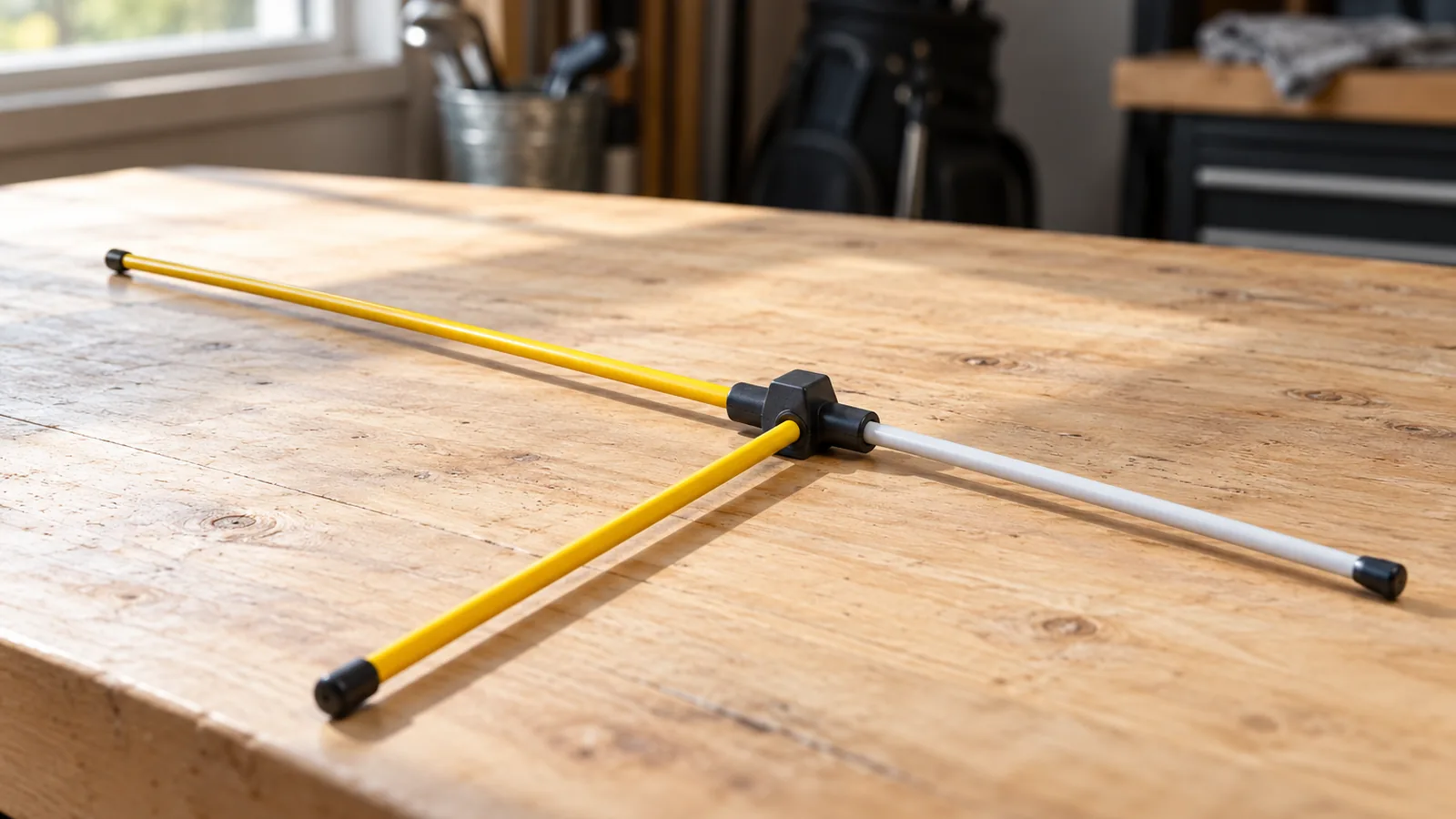
Product reviewedThe Connector Golf Training Aid
View Latest PriceThe Connector Golf Training Aid is worth considering for connection practice and visual feedback. In the connector golf training aid review, its 3 alignment rods stand out: they provide references for forearm alignment, rotation and shaft lean. Reviewer feedback supports using it for chips, pitches and putting, as well as movement drills without hitting balls.
It’s a better fit if you want visual cues alongside arm-and-body practice; choose a simpler aid if you want something lighter and easier to swing. Start with short-game swings, alternate aided and unaided swings, and reset the aid if it shifts.
The Connector Review Verdict
Buy for connection practice plus visual feedback
- Buy it if: You want to coordinate your arms and body and use rods for alignment feedback.
- Skip it if: You want a lighter, simpler aid to swing.
- Best alternative: Tour Striker Smart Ball, if you prefer a lighter, simpler connection aid.
The Connector makes sense if you want more than a reminder to keep your arms together. Its rods add visual feedback, and a MyGolfSpy tester reported cleaner impact in chips and pitches alongside a better feel for arm-body connection. Golf Monthly also praised its versatility, comfortable fit and shaft-lean feedback, making it useful for movement practice as well as short-game work.
Start with short-game swings, then alternate aided swings with unaided swings before moving to full swings, as the MyGolfSpy tester recommended. That gives you a chance to feel the movement without relying on the aid for every swing. Golf Monthly reported seeing Rory McIlroy use The Connector in practice and warm-ups, but that observation doesn’t show it caused performance gains.
Who Should Use The Connector
The Connector suits you if your main goal is practicing coordinated arm-and-body movement, rather than working on one isolated swing position. It’s ambidextrous, and a smaller junior version is available, so left- and right-handed golfers and younger players can use the design. According to Sure Golf, its stated uses range from putting to full swings, giving you room to practice the same connected motion across different shot types.
It’s also a fit for movement practice when you can’t get to a range. MyGolfSpy’s tester reported using it at home and said, “You don’t really need to hit golf balls with this.” That makes it relevant if you want to rehearse how your arms and body move together, even when you don’t have space or time for a full practice session.
For your decision, focus instead on whether you want feedback during movement practice. MyGolfSpy’s tester reported a clearer feel for arm-body connection and cleaner impact in chips and pitches, then recommended alternating aided swings with unaided swings as you progress toward full swings.
The Connector Specifications
The Connector combines arm-body connection practice with visual alignment feedback. Its design offers more guidance than a simple connection aid, with practice options from putting through full swings.
| Detail | Product information | Source |
|---|---|---|
| Material | Soft memory foam | mygolfspy.com (2024) sure-golf.com |
| Alignment feedback | 3 rods provide visual references for forearm alignment, rotation and shaft lean; point the centre rod toward the ball at setup | sure-golf.com |
| Practice uses | Putting, chipping, pitching and full swings | sure-golf.com |
| Fit | Ambidextrous; smaller junior version offered | sure-golf.com |
| Practice resources | Knowledge Centre access with 100+ structured video lessons by Dan Frost | sure-golf.com |
The rods give you visual references for positions during the swing, including shaft lean, rather than relying only on feel. That added feedback may suit golfers who want a clearer reference while working on arm-body coordination.
The reviewed product information listed no dimensions or weight for The Connector. Its broad range of practice uses makes it suitable for short-game work as well as full swings, while the smaller junior version provides an option for younger golfers.
More Details on Our Top Picks
The Connector Golf Training Aid
If your arms and body lose sync, The Connector is our pick for golfers practicing connected motion and impact. It sits between your forearms to encourage arm-body synchronization and uses three rods as swing-position references. Owners report an immediate feel for connected motion, plus useful practice for chips, pitches, and putting. You can also work with it at home without hitting balls, and its practice range extends from putting to full swings.
The lightweight foam aid fits between your forearms, with three alignment rods offering setup and impact references while reinforcing wrist position. Owners report that correct initial positioning matters, and alternating assisted swings with unaided swings helps keep practice useful. One reviewer praised its comfortable fit and shaft-lean feedback, though another found it doesn’t fit fully in most golf bags. Its foam construction and portable design suit range or practice-green sessions, while its compact practice role also makes no-ball movement drills possible.
Pros: 2024 reviewer reported immediate feel for connected arm-body motion · 2024 reviewer found it useful for chips, pitches, and putting · 2024 reviewer said it can be practiced at home without hitting balls.
Cons: 2024 Golf Monthly reviewer said it does not fit fully in most golf bags · 2024 MyGolfSpy reviewer said correct initial positioning is important.
Skip it if: you need a training aid that fits fully inside most golf bags.
- Practice Types:Putting, chipping, pitching, full swings
- Connection Training:Promotes arm-body synchronization
- Feedback Guides:3 rods; setup and impact references
- Fit Type:—
- Material:Foam
- Learning Resources:3 alignment rods

What Owners Report Beyond the Listing
Ross Eves found The Connector dense and awkward at first, so expect an adjustment period as you position it between your forearms. He also reported that it could occasionally slip during use.
That makes setup worth your attention: start by placing the aid correctly, then check that it stays in position as you move. MyGolfSpy’s reviewer also emphasized that correct initial positioning matters. If it shifts, reset it rather than continuing with a poor fit.
Ross Eves reported three practical handling drawbacks:
- Occasional slipping: The aid could slip during use.
- No retaining strap: It lacked a strap to stop it falling out.
- Travel and storage: He found it awkward to travel with or store.
These observations matter most if you plan to carry the aid between home, the range, and the practice green, or want a tool that stays securely in place without adjustment. For home practice, Golf Monthly’s reviewer said it could be used for movement drills without hitting balls.
The rods provide visual feedback, but that design comes with a handling trade-off: Ross Eves said simpler connection balls were lighter and easier to swing. Choose based on the feedback you’ll use: if alignment cues are useful to your practice, the rods may justify the extra bulk; if easy packing and a simpler feel matter more, a lighter aid may suit you better.
Alternatives to The Connector
The Connector’s rods make it a better fit if you want visual feedback while practicing arm-body connection; simpler options focus on the connection itself or a different swing feel. Ross Eves found that the rods add visual references, while lighter connection balls offer a simpler feel during swings. Choose by the feedback you need, rather than assuming every connection aid trains the same movement.
- DIY drill: Tuck a towel under your arms or a glove under an armpit to practice keeping your arms connected to your body without buying an aid. It’s a basic option, but it doesn’t provide rods or video lessons.
- Tour Striker Smart Ball: Pick this if you want an inflatable ball-and-lanyard approach for arm-body synchronization or help with a chicken-wing, when the lead arm bends away from the body during the swing. It’s also offered in a 2-pack.
- FinalPutt Connection Band: Choose this if you prefer a band that wraps around your arms to limit separation, rather than a ball-style aid. It’s listed as one-size-fits-all.
- Sure-Golf Radius Strap: Consider this if swing width is your main focus; its elastic strap has incremental anchor points for adjusting resistance.
For connection practice, start with the simplest method that gives you enough feedback to repeat the movement. Add visual guidance if you need it: The Connector’s rods can show alignment, takeaway, shallowing and clubface direction, while the Smart Ball and Connection Band use different ways to keep the arms together. If your goal is swing width rather than arm-body connection, the Radius Strap is the more direct match.
Frequently Asked Questions
What swing faults is The Connector designed to help with?
The Connector is designed to help you keep your arms and body moving together, with rods that give you visual references for forearm alignment, rotation, and shaft lean. It can also support work on takeaway, shallowing, and clubface direction, but it isn’t described as a fix for every swing fault.
How does The Connector compare with a towel or foam ball between the arms?
A towel-under-the-arms drill gives you a no-purchase way to practice connected arm-and-body motion, while The Connector adds visual feedback from its rods. The Connector suits you if those alignment references matter; a simpler ball-style aid may feel lighter and easier to swing.
How much practice does it take for the new swing feel to stick?
The available guidance gives no fixed practice duration.
How do you position The Connector before swinging?
Place The Connector between your forearms and point the centre rod toward the ball at setup. Correct initial positioning matters, and owners report that the aid can occasionally slip, so reset it if it shifts during practice.
Is The Connector comfortable and easy to fit in a golf bag?
No, not for every golfer: one reviewer praised its comfortable fit, while another found it dense and awkward at first and reported occasional slipping. Golf Monthly’s reviewer also said it doesn’t fit fully in most golf bags, so it may suit practice at home or on the range better than compact carry.
Conclusion
Choose The Connector if you want to practice connected arm-and-body motion with visual alignment cues. Its foam body and three rods provide setup and impact references, and owner feedback supports using it for chips, pitches, putting, and no-ball movement drills. The rods are its main advantage over simpler connection aids.
Handling is a consideration: owners report that correct positioning matters, and one reviewer found it awkward at first, prone to slipping, and hard to pack in most golf bags. If visual feedback is worth that adjustment for you, start with short-game swings and alternate aided swings with unaided ones before progressing to full swings. If easy packing and a simpler feel matter more, choose the Tour Striker Smart Ball instead.
Sources
- sure-golf.com (sure-golf.com)
- The Connector Training Aid Review (mygolfspy.com, 2024-03-21T12:10:00+00:00)
- golfmonthly.com (golfmonthly.com)
- rosseves.com (rosseves.com)
- Smart Ball (tourstriker.com)
- reddit.com (reddit.com)
- Connection Band (finalputt.com)
- Radius Strap (sure-golf.com)